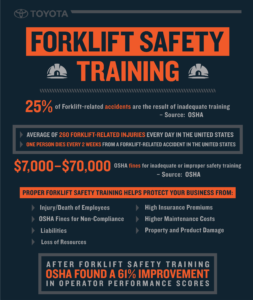
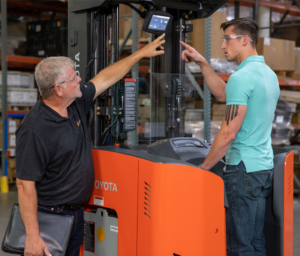
Forklift certification is an important part of maintaining a safe workplace and meeting OSHA forklift training requirements. Employers are responsible for ensuring forklift operators receive the proper training and evaluation before operating powered industrial trucks in the workplace.
For operators, understanding the requirements is just as important. Forklift training isn’t simply about completing a class—it includes learning how to safely operate the specific equipment you use and demonstrating that knowledge in the workplace.
Here are three important forklift certification requirements operators and employers should know.
1. Forklift Certification Requires Both Instruction and Hands-On Training
Forklift operator training includes more than classroom instruction. OSHA requires training to include formal instruction, practical training, and an evaluation of the operator’s performance.
Formal instruction may include lectures, discussions, written materials, videos, or other training methods. This portion covers important topics such as forklift operation, stability, load handling, workplace hazards, and safe operating practices.
Practical training gives operators the opportunity to apply what they’ve learned through demonstrations and hands-on exercises.
Operators must also be evaluated in the workplace before being authorized to operate the equipment.
2. Operators Must Be Trained for the Forklifts They Use
Forklifts aren’t all operated the same way. An employee who operates multiple types of powered industrial trucks may need training that addresses the specific equipment they use.
For example, operating a sit-down counterbalanced forklift can require different skills and procedures than operating an order picker, reach truck, or other specialized equipment.
Training should also address workplace-specific conditions and equipment configurations that affect safe operation. This can include attachments, load types, ramps, narrow aisles, pedestrian traffic, and other conditions operators encounter on the job.
If an operator is asked to use equipment they haven’t been trained to operate, additional training and evaluation may be required before they use it.
3. Forklift Operators Must Be Evaluated at Least Every Three Years
OSHA requires employers to evaluate each forklift operator’s performance at least once every three years.
It’s important to distinguish this evaluation requirement from refresher training. Refresher training may be required sooner when certain situations occur, including unsafe operation, an accident or near-miss, an evaluation showing the operator isn’t operating safely, assignment to a different type of truck, or workplace changes that could affect safe operation.
Keeping accurate training and evaluation records can help employers track operator requirements and maintain a safer workplace.
Forklift Operator Training in Idaho & Utah
Dillon Toyota Lift provides forklift operator training for businesses throughout Idaho and Utah. Training can be conducted at your facility or through one of our locations, making it easier to train new operators, evaluate experienced operators, and keep your team current on forklift safety requirements.
Whether you’re training a new employee or determining whether an experienced operator needs refresher training, our team can help you understand the appropriate next steps.
Ready to schedule forklift operator training? Contact Dillon Toyota Lift to learn more about available training options in Idaho and Utah.