Forklift tires play an important role in equipment performance, operator comfort, and safe material handling. Worn or damaged tires can affect stability, traction, ground clearance, and the forklift’s components. Knowing when to replace forklift tires can help prevent unnecessary wear, reduce downtime, and keep your equipment operating efficiently.
How Do You Know When Forklift Tires Need to Be Replaced?
Forklift tires should be inspected regularly for wear, damage, and changes in performance. Replacement timing depends on the tire type, operating environment, hours of use, floor conditions, loads, and how the forklift is operated.
Instead of relying only on operating hours, look for physical signs that the tire has reached the end of its usable life.
Signs It's Time to Replace Your Forklift Tires
Forklift tires don’t always wear at the same rate, so regular inspections are important. Watch for the following signs of forklift tire wear to help determine when replacement may be needed.
Wear Beyond the Recommended Limit
Many forklift tires include wear indicators or manufacturer guidelines that help determine when replacement is necessary. Once a tire reaches its recommended wear limit, it should be evaluated for replacement.
Cracking, Chunking or Tearing
Cracks, missing chunks of rubber, splitting, or other visible damage can indicate that a tire is deteriorating. Damage may occur faster in demanding applications or on rough surfaces.
Flat Spots
Flat spots can cause vibration and an uneven ride. They may develop from aggressive braking, spinning tires, prolonged parking, or normal wear over time.
Uneven Tire Wear
One side of a tire wearing significantly faster than another can affect forklift performance and may also indicate another issue that should be inspected.
Different Forklift Tires Wear Differently
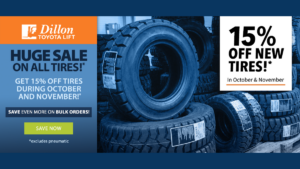
Forklifts can use several types of tires depending on the equipment and application. Cushion, solid pneumatic, press-on, and air pneumatic tires have different construction and wear characteristics. The correct replacement criteria will depend on the tire type and manufacturer recommendations.
Why Worn Forklift Tires Shouldn't Be Ignored
Continuing to operate a forklift with excessively worn or damaged tires can affect more than the tires themselves. Increased vibration and reduced ground clearance can contribute to unnecessary wear on other components and affect equipment performance.
Regular tire inspections can help identify problems before they lead to additional downtime or repair costs.
Forklift Tire Replacement & Mobile Tire Pressing in Idaho and Utah
Dillon Toyota Lift provides forklift tires for multiple makes and models of material handling equipment throughout Idaho and Utah. Our team can help identify the appropriate tire for your equipment and application.
For press-on tire applications, our mobile tire pressing service allows many forklift tires to be replaced at your facility, helping reduce the time and hassle associated with transporting equipment for tire service.
Frequently Asked Questions About Forklift Tire Replacement
Look for excessive wear, cracking, chunking, flat spots, uneven wear, or noticeable changes in ride quality. Tire-specific wear indicators and manufacturer recommendations should also be used when determining when replacement is necessary.
There is no single replacement interval for every forklift tire. Tire life depends on tire type, operating hours, loads, floor conditions, travel distance, application, and operator habits.
Excessively worn or damaged tires can increase vibration and reduce ground clearance, potentially contributing to additional wear on forklift components.
Depending on the tire and equipment, yes. Dillon Toyota Lift offers mobile tire pressing for applicable press-on forklift tires, allowing tire replacement to be performed at the customer’s facility.