Forklift operator safety training is about much more than learning how to drive a lift truck. Operators need to understand their equipment, workplace hazards, load handling, pedestrian safety, inspections, and the safe operating practices required for their specific work environment.
Whether you’re training a new forklift operator or refreshing an experienced operator’s skills, here are 10 important topics covered during forklift operator training.
1. Who Can Operate a Forklift?
Forklifts should only be operated by trained and authorized employees.
Employers are responsible for ensuring operators receive appropriate training and demonstrate that they can safely operate the equipment before being authorized to use a forklift in the workplace.
2. How Forklifts Differ From Cars
Driving experience doesn’t automatically translate into forklift operating experience.
Forklifts handle differently than passenger vehicles. Many forklifts use rear-wheel steering, have different visibility considerations, and respond differently when carrying or lifting a load.
Operators need to understand these differences and how they affect turning, stopping, stability, and maneuvering in the workplace.
3. How to Safely Enter and Exit a Forklift
Safe operation starts before the forklift even moves.
Operators should use three points of contact when entering or exiting a forklift and use the steps and handholds provided by the manufacturer. Keeping hands, footwear, and contact surfaces clean can also help reduce the risk of slips and falls.
Operators should never jump from the forklift.
4. How to Read a Forklift Data Plate
A forklift’s data plate provides critical information about the truck and its operating limitations.
Operators should know how to locate and understand information such as rated capacity, load center, lift height, truck weight, and other equipment specifications.
Attachments can affect a forklift’s capacity and operating characteristics, so operators should make sure the forklift has an accurate data plate that reflects its current configuration.
5. How Loads Affect Forklift Stability
Forklift stability changes as loads are picked up, transported, raised, lowered, and positioned.
Operator training should cover the forklift’s stability principles, center of gravity, load capacity, and proper load handling. Operators also need to understand how factors such as load size, weight, height, speed, turns, and surface conditions can affect stability.
Understanding these principles helps operators avoid tip-overs, dropped loads, and other potentially serious incidents.
6. How to Work Safely Around Pedestrians
Forklift safety isn’t limited to the person behind the controls.
Operators and pedestrians often share the same warehouses, loading areas, production facilities, and outdoor workspaces. Training should address pedestrian traffic, intersections, blind spots, designated walkways, visibility, and communication.
Operators should remain alert for pedestrians, while pedestrians should avoid assuming a forklift operator can see them.
7. Why Pre-Operation Forklift Inspections Matter
Forklifts should be inspected before being placed into service.
A pre-operation inspection can help identify problems with critical components and systems before they contribute to an equipment failure or safety hazard.
Depending on the equipment, an inspection may include items such as:
- Forks and mast components
- Tires and wheels
- Brakes and steering
- Hydraulic systems
- Safety devices and warning equipment
- Battery or fuel system
- Seat belt and operator restraint system
- Visible leaks or damage
If an inspection identifies a condition that could affect safe operation, the equipment should be removed from service until the issue is properly addressed.
8. How to Operate a Forklift on Ramps and Inclines
Ramps and grades can change how a forklift handles and affect truck stability.
Operators should be trained on the proper procedures for traveling on ramps and inclines, including how the direction of travel may change depending on whether the forklift is loaded or unloaded.
Always follow the manufacturer’s operating instructions and your facility’s established safety procedures.
9. How Safe Forklift Operation Is Reinforced
Forklift safety training doesn’t end when the initial course is complete.
Employers should reinforce safe operating practices, address unsafe behavior, evaluate operators as required, and provide refresher training when appropriate.
A strong safety program helps make safe forklift operation part of everyday workplace practices rather than a one-time training event.
10. Why Forklift Training Is More Than a Written Test
Passing a written test alone doesn’t complete forklift operator training.
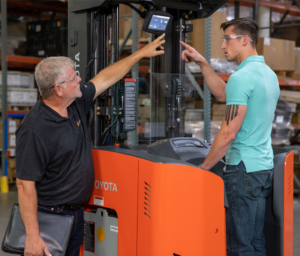
Training includes formal instruction, practical hands-on training, and an evaluation of the operator’s ability to safely operate the forklift.
Workplace-specific training is also important because every facility is different. Operators may encounter narrow aisles, ramps, loading docks, pedestrian traffic, specialized attachments, unusual loads, or other hazards specific to their operation.
Whenever possible, operators should be evaluated under conditions that reflect the environment in which they’ll actually be working.
Forklift Operator Training in Idaho & Utah
Dillon Toyota Lift provides forklift operator safety training for businesses throughout Idaho and Utah. Training options are available to help businesses train new operators, refresh operator knowledge, and maintain a safer material handling operation.
Training can be conducted at your facility or through Dillon Toyota Lift, depending on your needs.
Ready to schedule forklift operator training? Contact Dillon Toyota Lift to learn more about available training options in Idaho and Utah.